
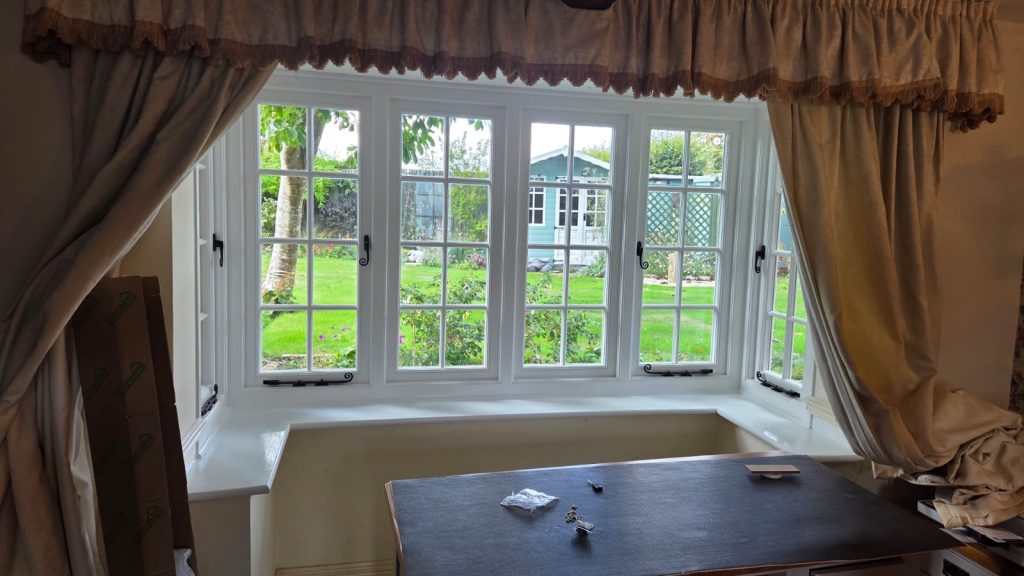
Timber casement windows for Dorset homes
A casement is a window that opens on hinges, usually at the side, sometimes at the top. It is the window on most houses built after 1920 in Dorset, from interwar semis and bungalows to post-war family homes, and on older cottages where the openings are too small for sashes. We supply and fit new double glazed wooden casement windows and repair original frames. For ideas about pane layouts and opening sections, see wooden windows for Lilliput’s interwar homes and replacement casements for Broadstone bungalows.For a window that opens into the room, compare timber tilt and turn windows or browse the full range.
New casement windows, made to order
We measure every opening and supply the window to fit it. The layout is chosen to suit the room and the house: side-hung opening casements where you want air, fixed lights where you want the view, top-hung vents for kitchens and bathrooms, and a frame section that looks right for the age of the house rather than a generic profile. Interwar houses keep their small-paned or leaded top lights; cottages get the simple two-light casements they were built with; modern houses get clean, plain frames.Frames are made from engineered softwood or hardwood and finished in a factory-applied microporous paint system in any colour. Glazing is double glazed as standard with low-emissivity glass and warm-edge spacers. Casements are fitted with weatherseals, friction or butt hinges, multipoint espagnolette locks and, where wanted, child restrictors and trickle vents.Replacing uPVC with timber
uPVC windows fitted in the 1980s and 90s are now at the end of their lives: discoloured, dropped on their hinges, seals gone and glass units misted. New uPVC repeats the cycle. Timber casements last two to three times as long, can be repaired and repainted instead of thrown away, and look better on the house. They cost more to buy and less to own. Our guide on how long timber windows last sets out the comparison honestly.The swap is straightforward. We measure, supply the windows, and our own fitters remove the old units, fit the new ones and make good inside and out, usually in two to four days for a typical house.Repairing original casements
Interwar and older casements repair well. We splice new timber into rotten cills and bottom rails, replace worn hinges, stays and fasteners, re-glaze, re-lead leaded lights where the cames have failed, and fit draught seals. A repaired casement keeps the original timber and glass and costs far less than a new one. See our repairs and restoration page.Options
- Layout: any combination of opening, fixed and top-hung lights, including bays and bows.
- Glazing bars: plain, small-paned, or leaded; slim double glazing keeps bars narrow.
- Finish: factory paint in any colour or a translucent stain; coastal specification with stainless or brass ironmongery near the sea.
- Ironmongery: handles and stays in brass, chrome, nickel or black, traditional or modern patterns.
- Security and ventilation: multipoint locks, restrictors and concealed trickle vents.